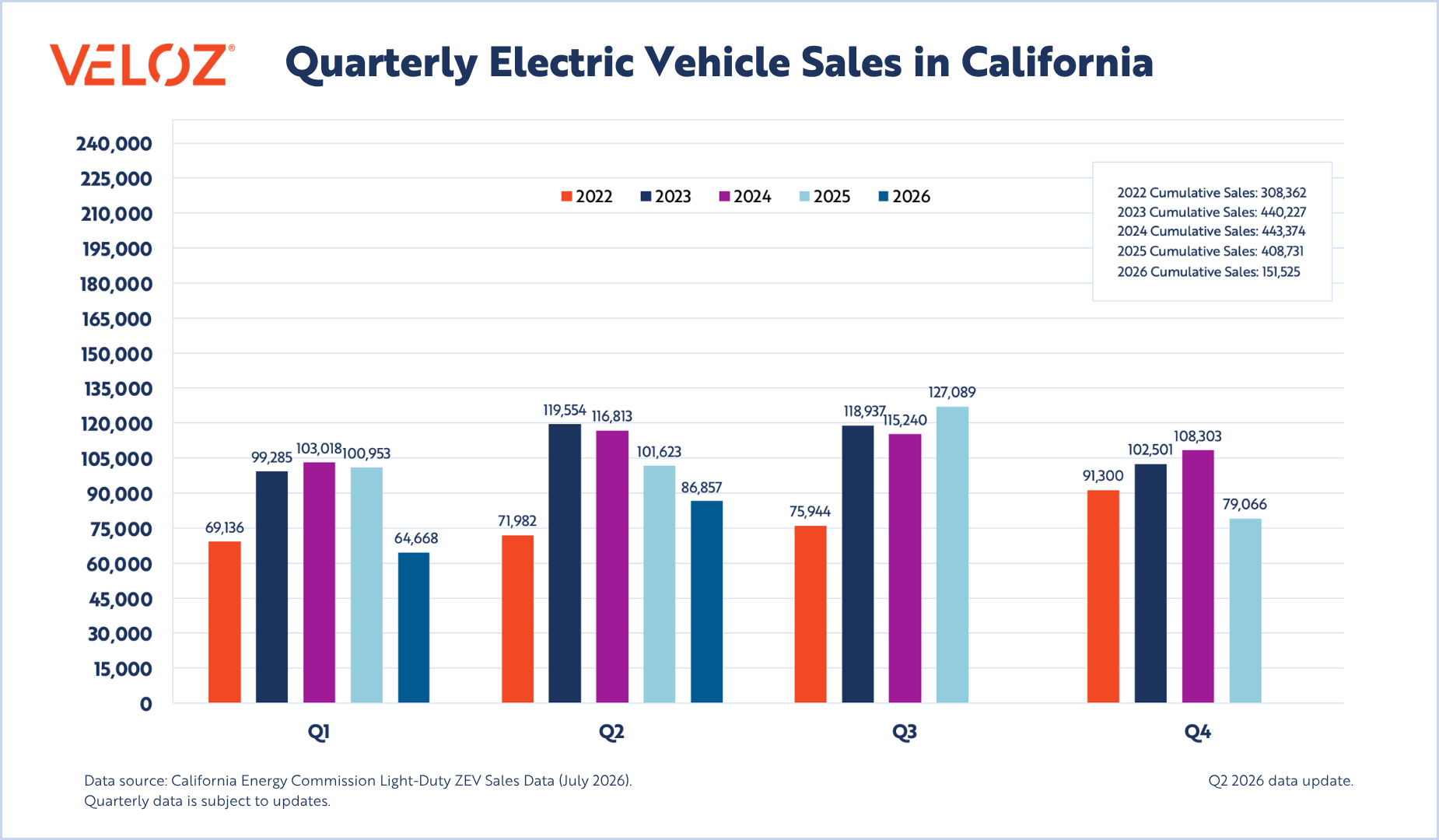
While year-over-year California new EV sales remain in decline, the market is beginning to stabilize in the wake of federal policy changes and remains poised for future growth.
California’s Q2 2026 EV Sales Overview
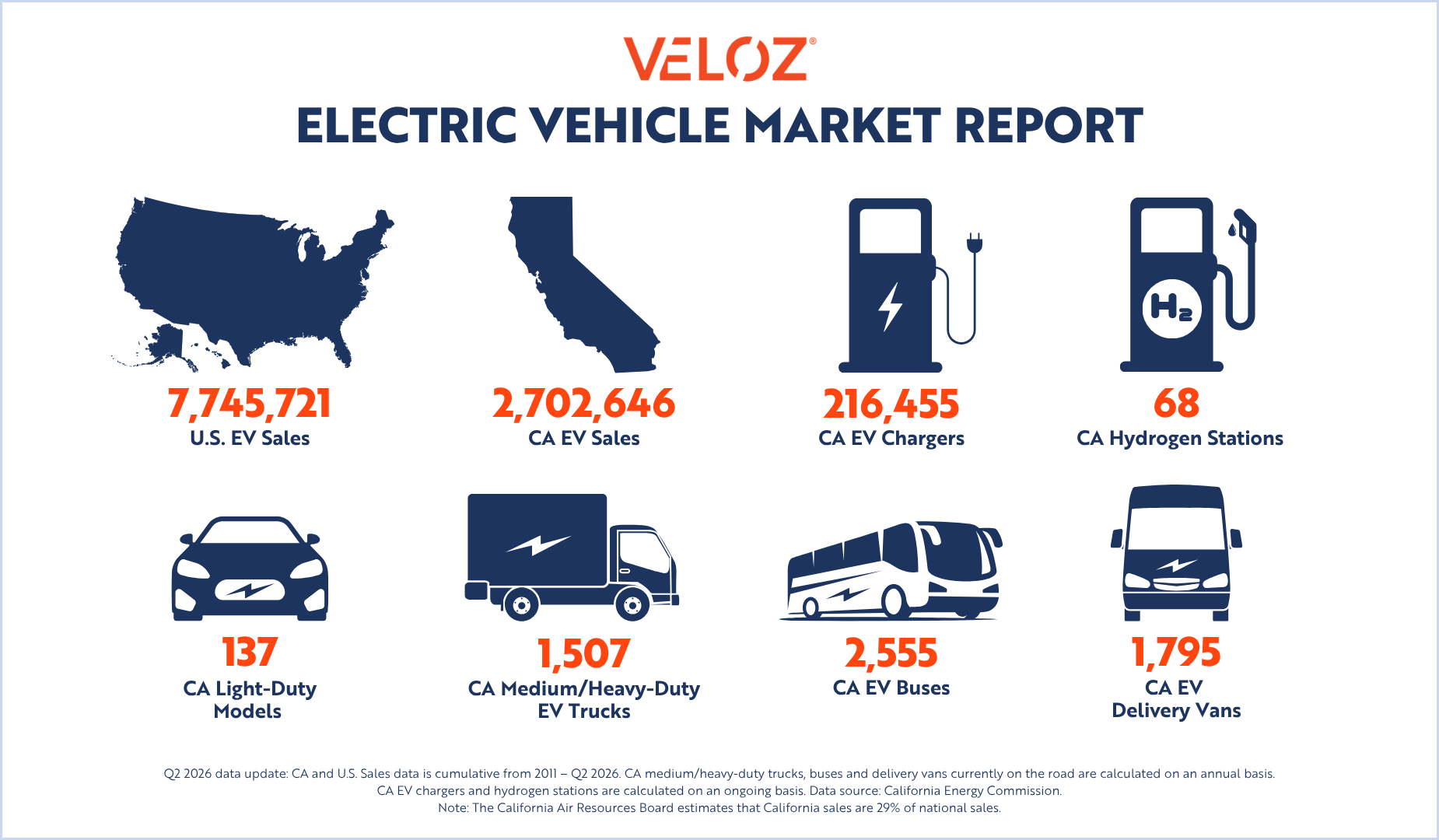
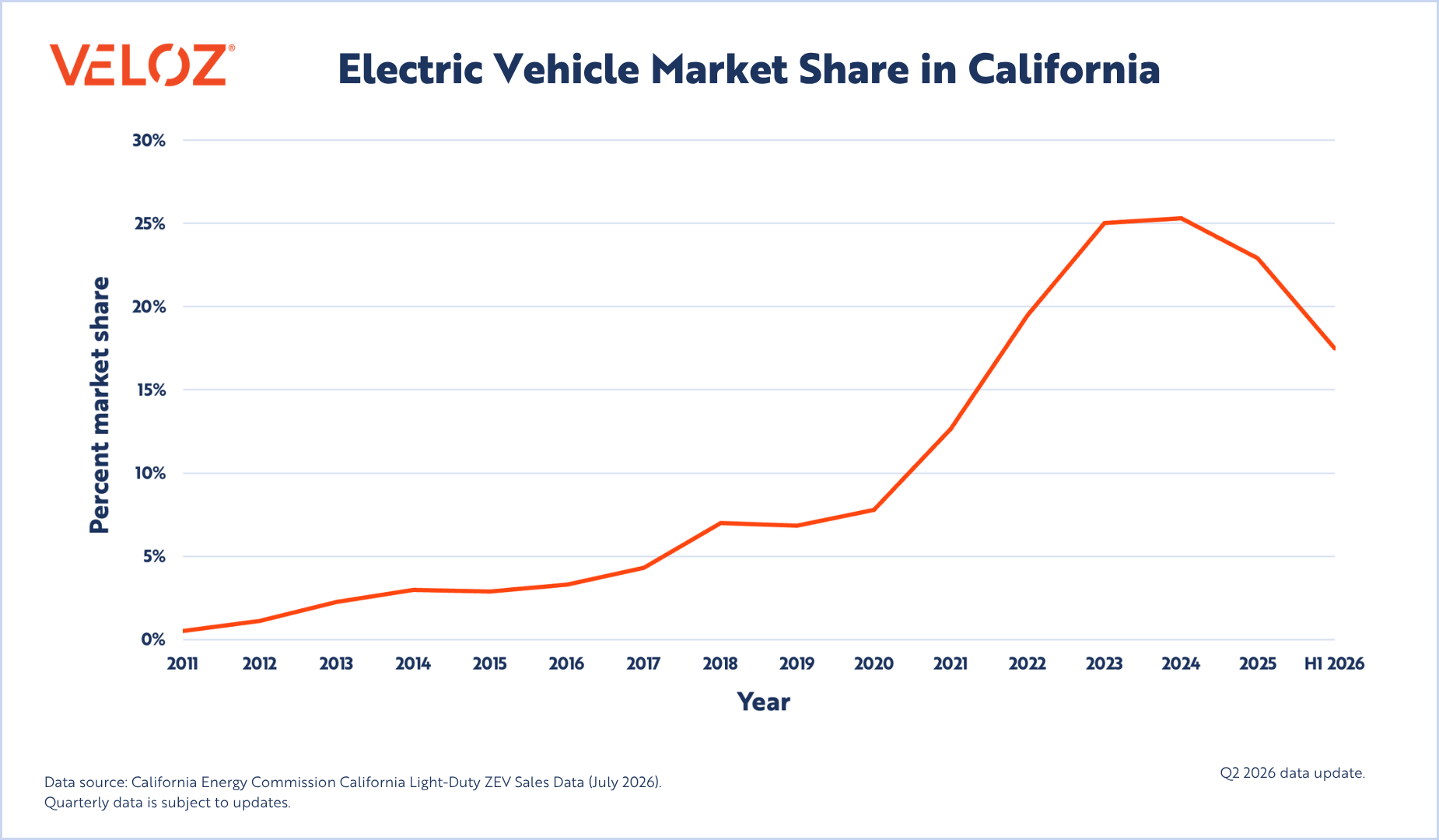
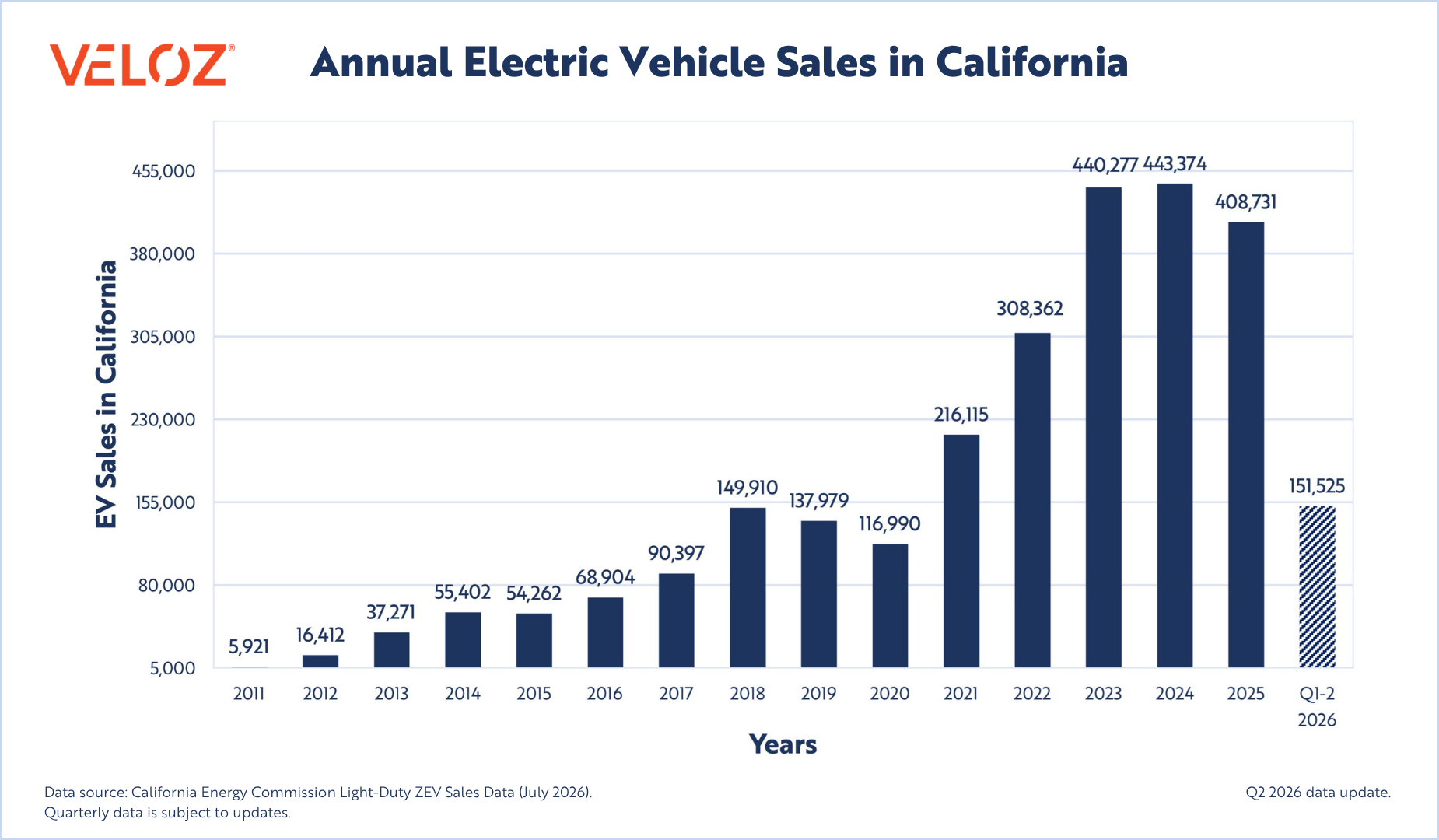
In Q2 2026, California experienced its highest new EV market share since the surge in EV sales spurred by the sunsetting of the federal EV tax credit in Q3 2025. Last quarter, Californians purchased 86,857 new EVs, comprising 19.1% of total new light-duty vehicle sales in the state. While the EV market share of new vehicles sold dipped by 2.4% as compared to the same period last year when the federal tax credit was still available to consumers, Q2 2026 saw an increase in market share by 3.3% relative to last quarter. New EV sales were complemented by a record-setting quarter for the used EV market, which nationally saw a 29% increase from the same period last year. This indicates that California is entering a period of stabilization after federal policy headwinds began affecting EV sales nationwide last year.
California’s Top New EV Models Sold in Q2 2026
- Tesla Model Y
- Tesla Model 3
- Hyundai IONIQ 5
- Toyota bZ
- Tesla Model X
- Rivian R1S
- Chevrolet Equinox EV
- Lexus RZ 350e
- Ford Mustang Mach-E
- Toyota Prius Plug-in Hybrid
Tesla remained an EV market leader anchored by Model Y and Model 3 sales while Hyundai’s IONIQ 5 remained popular among California buyers as the third highest-selling EV model of the quarter. Of the 86,857 new EVs sold in Q2, over 87% were battery electric vehicles – indicating a strong consumer preference for all-electric models.
Charging Infrastructure Breakdown
California continues to charge ahead in building an accessible and reliable network of EV charging statewide. The state has over 216,000 public and shared private chargers available for drivers, including over 20,000 public fast chargers that enable drivers to refuel quickly when they’re on the go. Utilities across the state continue to offer more affordable electricity rates for drivers and fleets that can charge their vehicles during off-peak periods, magnifying the savings potential from going electric while putting downward pressure on rates for all utility customers. Moreover, convenient charging features like Electrify America’s Plug&Charge and EVgo’s Autocharge+ can make public charging easier than filling up a tank of gas.
California’s Evolving Policy Landscape
In Q2, California policy continued to boost EV adoption in the face of federal headwinds. California Governor Gavin Newsom and the State Legislature dedicated over $135 million to establish a new state-wide rebate for first-time EV buyers arriving this summer, with up to $3,500 in incentives available per qualified vehicle. This market accelerating incentive program is a partnership with eligible automakers who will provide matching incentive contributions, demonstrating the state’s commitment to transportation electrification and filling in the gap from lost federal support. This point-of-sale rebate is part of a larger $600 million budget commitment that drives clean transportation and vehicle electrification projects across the state. As summarized in an Atlas Public Policy report created in conjunction with EVs for All America, “By bringing EVs to more people, these public investments can earn returns for California residents in many ways, such as supporting local manufacturing and EV charging jobs, delivering health and environmental benefits, and allowing drivers to save money in some cases.”
To complement progress on driving EV adoption, the California Energy Commission (CEC) announced $55.2 million in renewed funding for the state’s flagship fast charging incentive program, the California Electric Vehicle Infrastructure Project (CALeVIP). The CEC also continues to implement recently adopted EV Charger Data and Reliability Standards designed to enhance the transparency and reliability of California’s public charging network.
Under the direction of the California Public Utilities Commission, Pacific Gas & Electric and Southern California Edison proposed standardized Flexible Service Connection offerings. In plain terms, these offerings will help speed up the installation of EV charging projects by allowing EV charging providers to use the power available on the grid today as a “bridge” while utilities complete the upgrades necessary to provide full power to EV charging stations tomorrow.
Finally, as electric autonomous vehicle (AV) providers like Waymo and Zoox expand in California, the Department of Motor Vehicles adopted new AV regulations designed to augment safety, transparency, and testing requirements for driverless vehicles. Taken together, these policy developments place California in a leadership position as the EV market continues to rebound and can serve as a resource for other states looking to reap the benefits of electric mobility.
California in Context: National and Global Trends
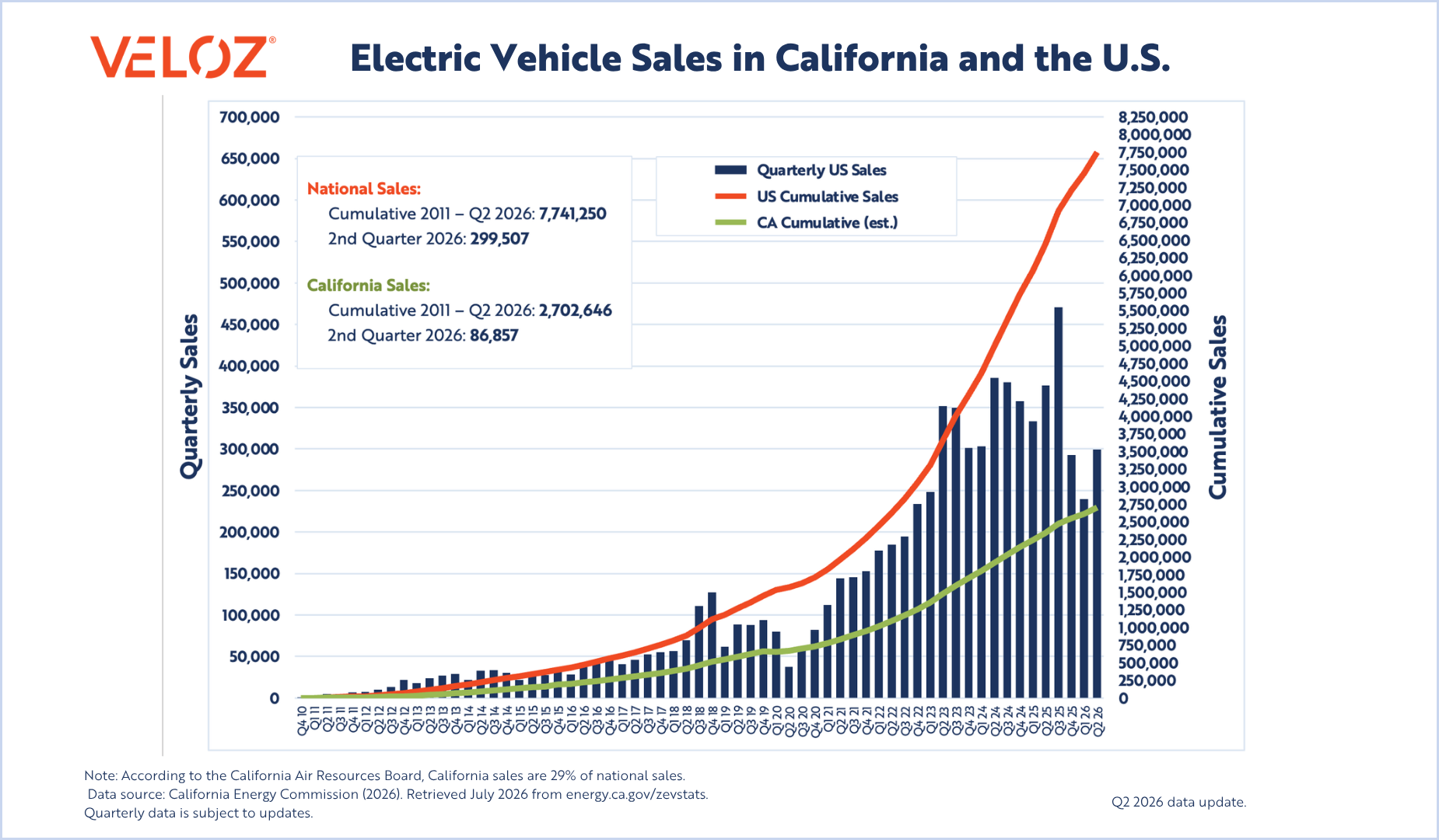
While California’s ZEV market has proven to be more resilient than the national average, it follows a similar trend to what other states have experienced across the country: a market contraction in Q4 2025 followed by a gradual rebound in new sales. In the used EV market, rising prices indicate robust demand even as the number of off-lease EVs increased significantly this quarter: Cox Automotive’s Manheim Used EV Index rose 12% in June relative to June 2025 and used EV sales jumped 24.7% year-over-year in May to nearly 43,000 units.
Across the US, the number of public EV chargers has surged past 250,000, with nearly 75,000 public fast chargers along freeway corridors and urban areas. Over 4,000 new public fast chargers were deployed in Q2; moreover, fast charging stations are getting larger, faster, and more reliable as more drivers go electric.
At a global level, the International Energy Agency anticipates that light-duty EV sales will reach 28% of total annual sales – or 23 million units – in 2026. These gains are anchored in part by a sustained global energy crisis that unfolded in February, underscoring the continued volatility of oil markets in the U.S. and abroad. Improved model availability and affordability, EV charging expansion, and enhanced EV outreach are also contributing to renewed EV sector growth.
Each quarter, Veloz analyzes California’s EV sales to track how the market is evolving. As the organization behind the nation’s largest and most inventive multi-partner EV public education campaign, and a convener of leaders across the public and private sectors, Veloz brings both market intelligence and systems-level perspective to its reporting. These quarterly updates reflect the most current data collected and visualized in collaboration with the California Energy Commission and the California Air Resources Board, offering a clear, trusted view into the momentum shaping the state’s EV market.
For media inquiries, please contact Margaret Mohr, Veloz Communications Director, at [email protected].