
Infrastructure investment and consumer adoption continue to reinforce California’s EV market foundation.
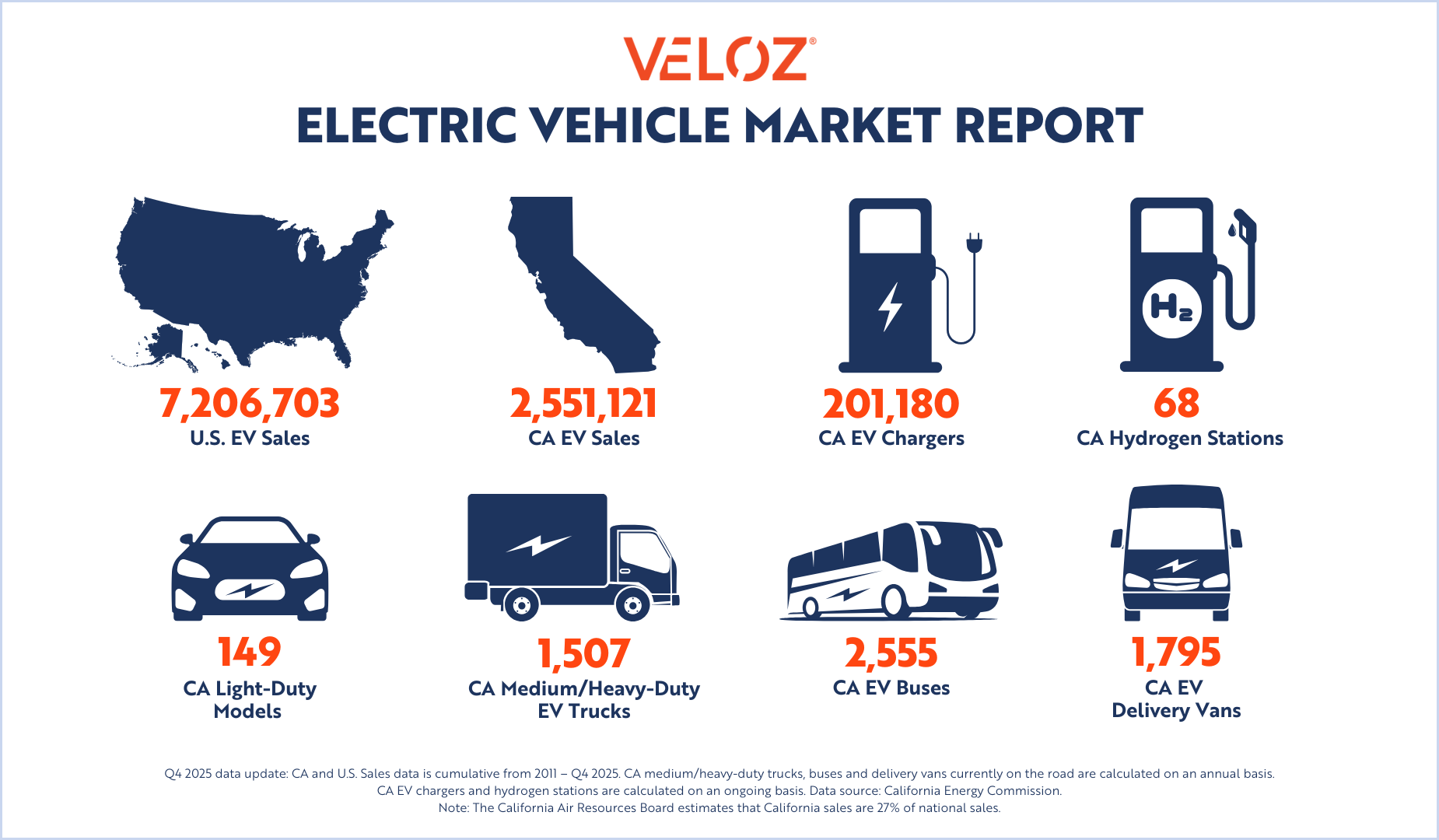
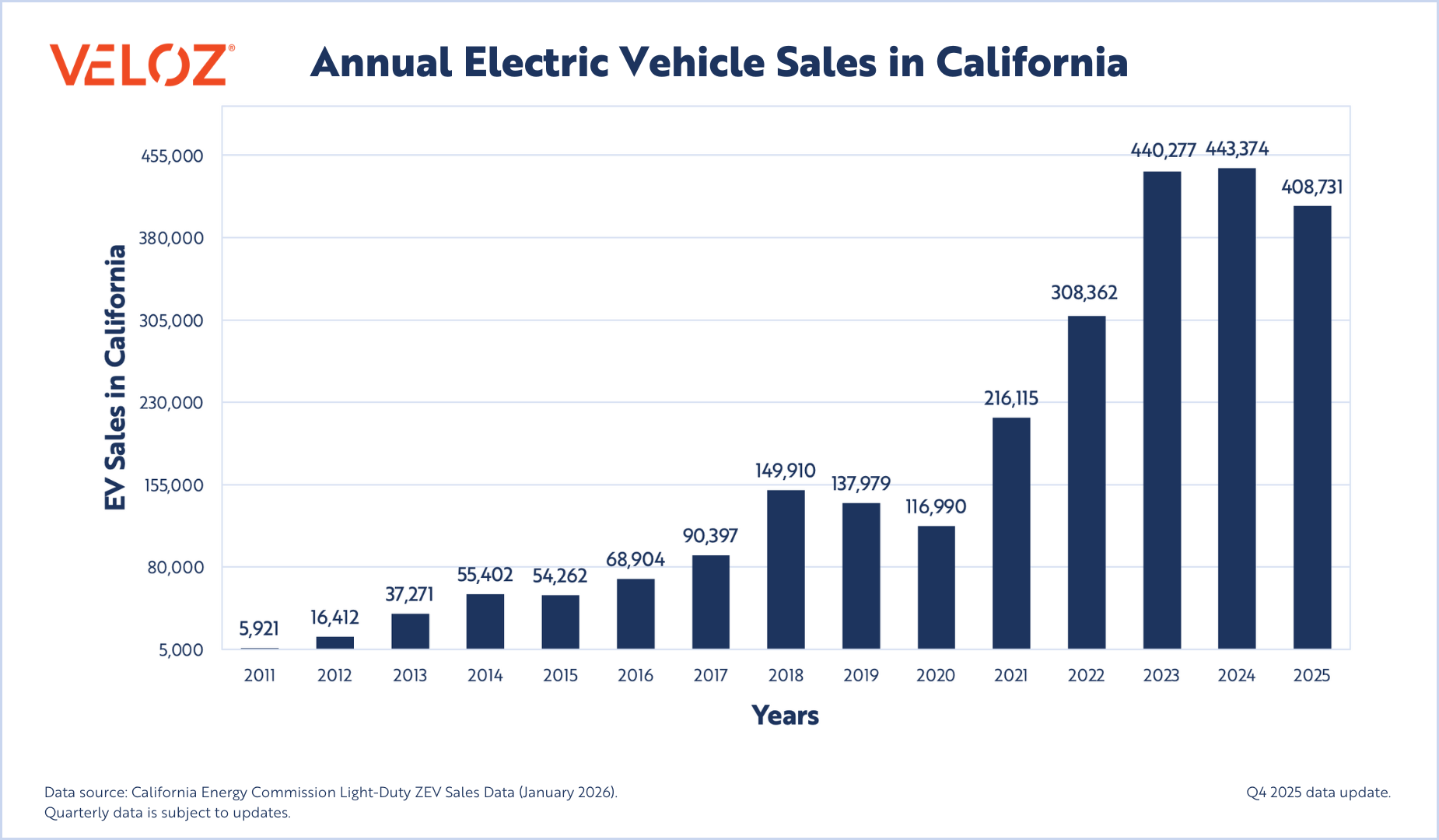
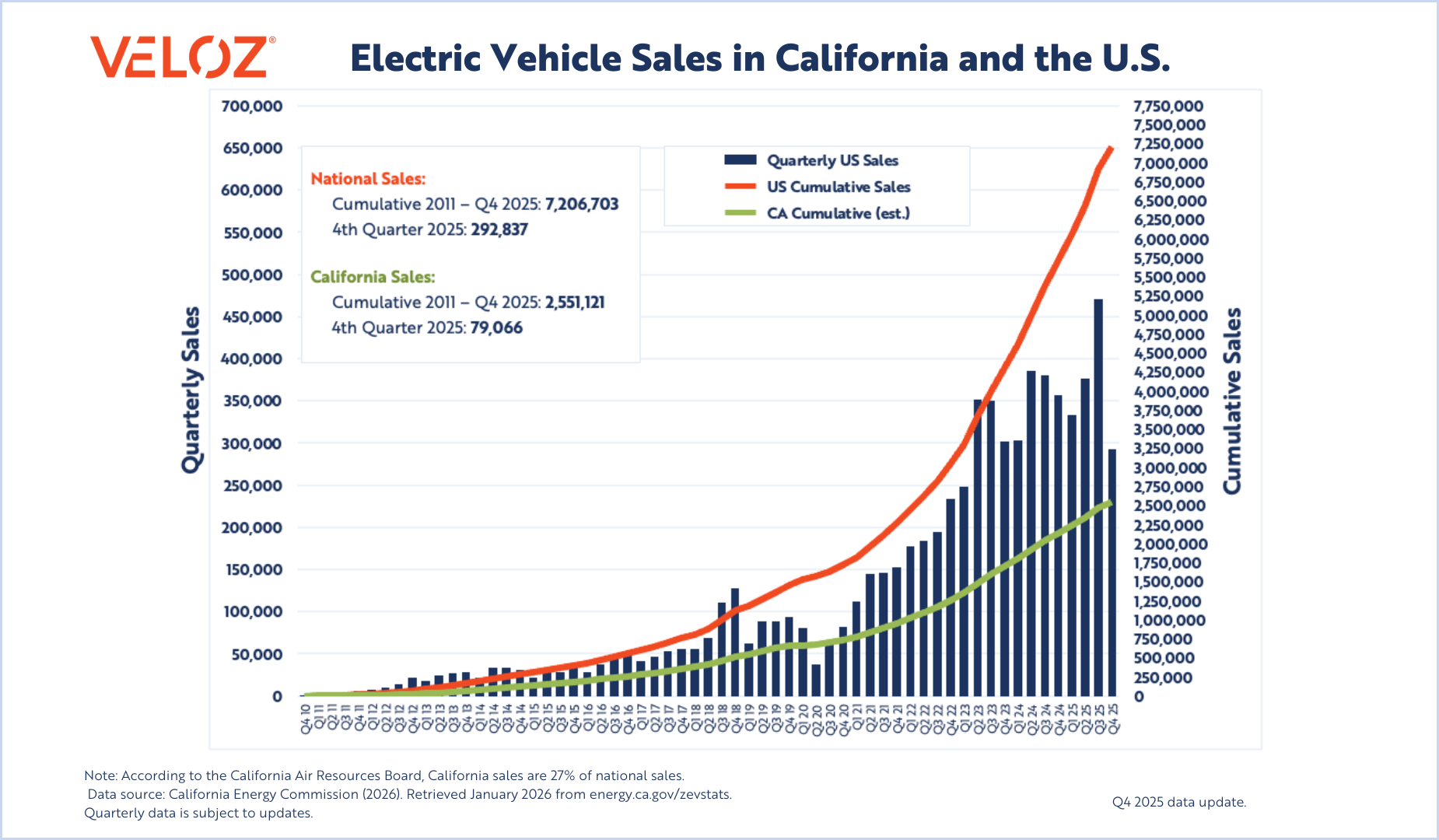
In Q4 2025, California surpassed a significant milestone with more than 2.5 million cumulative new EVs sold since 2011. Sales from the quarter added 79,066 new EVs, representing 18.9% of total light-duty vehicle sales, continuing the state’s steady pace of adoption at scale. Year-over-year, California’s EV market share shifted from 25.3% in 2024 to 22.9% in 2025, indicating relative stability given the federal policy changes affecting both incentives and consumer purchasing conditions. The combination of long-term consumer programs, the exponential growth in charging ports statewide driven by public and private sector investment, and the increased availability of new and used EVs, underscores how California’s ongoing commitment to clean transportation continues to foster the EV market regardless of changes in federal tax credits.
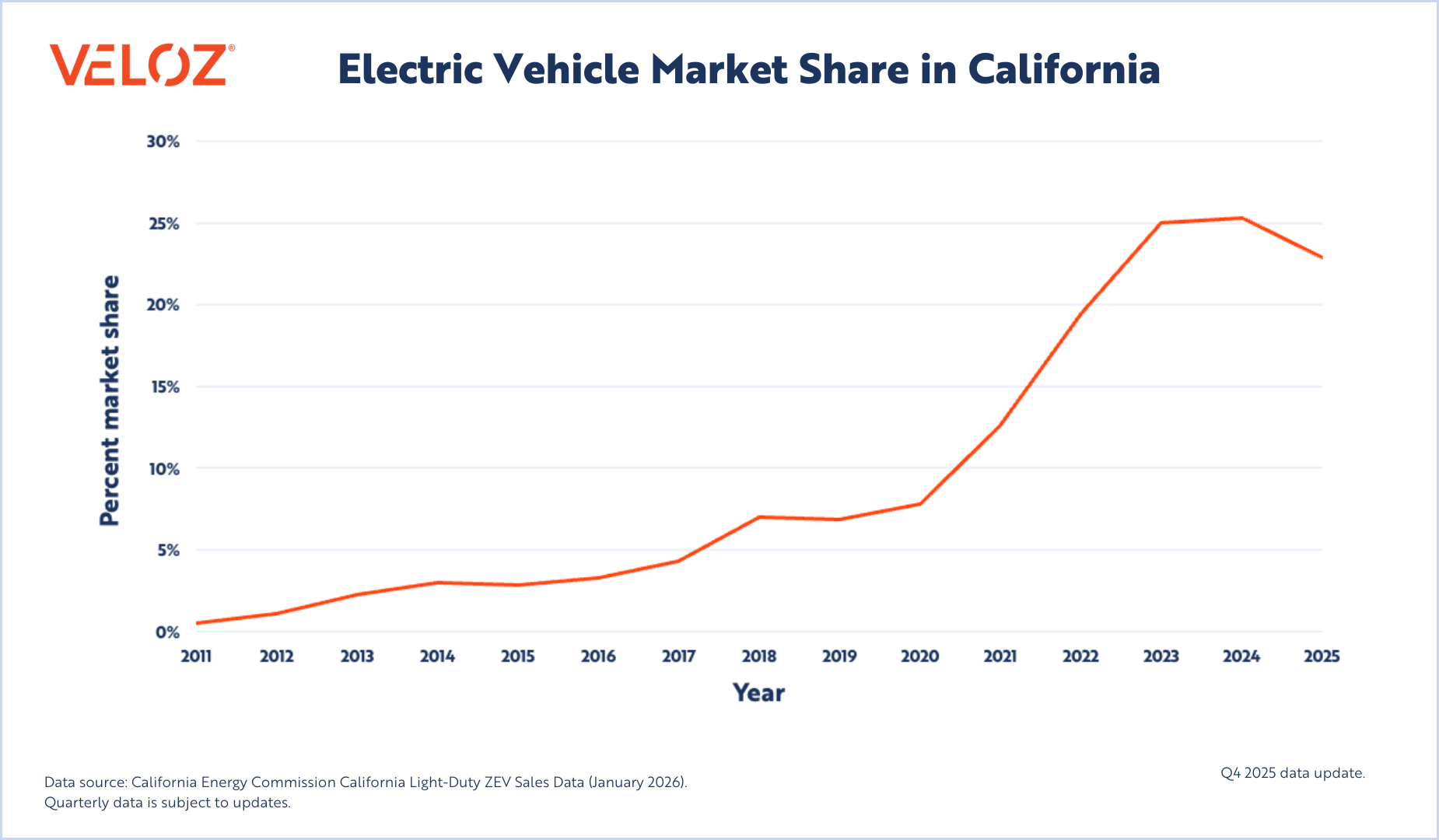
EVs accounted for 18.9% of California’s light-duty vehicle sales in Q4 2025, compared with 25.1% in Q4 2024. This slight decrease in market share from the previous year reflects a shift in anticipated Q4 sales to Q3 due to the sunsetting of federal EV tax credits in September 2025. Purchasing in Q3 was also boosted by cost-cutting deals from automakers, which significantly boosted demand from consumers. As a result, Q4 reflects a redistribution of demand within the second half of the year rather than a change in underlying interest. Across Q3 and Q4 combined, California’s EV market share averaged 23.6% in the second half of 2025 — compared to a 25.7% in the same period of 2024 —providing a more representative view of consumer adoption during this transition period.
In October 2025, California saw investments in the state’s EV and ride-share fleets. The California State Transportation Agency (CalSTA), placed an order for more than 600 Rivian electric vehicles for Caltrans, one of the largest public-sector EV purchases in the state’s history. Uber, which is headquartered in California, rebranded its “Uber Green” ride option to “Uber Electric” and launched a new “Go Electric” program offering eligible U.S. drivers up to $4,000 in grants to buy new or used electric vehicles as part of its push toward zero-emission rides and to help offset the expiration of federal EV tax incentives. With Uber estimated to hold 74% of the rideshare market, this means over half a million drivers potentially have access to this program in California.
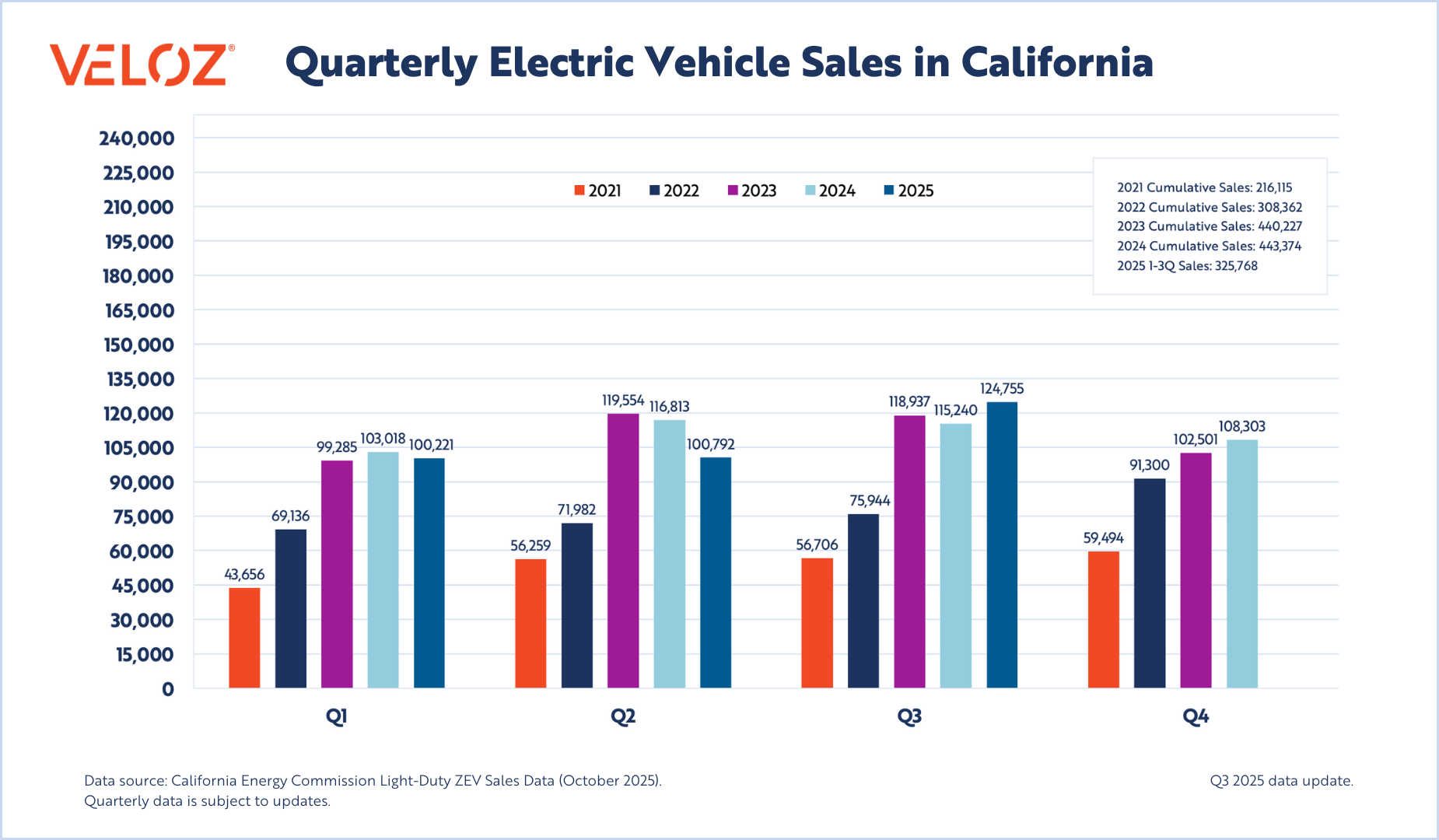
Q4 2025 recorded 79,066 new electric vehicles sold in California, compared with 108,303 in Q4 2024. This year-over-year change reflects how shifts in incentive structures can influence purchase timing, while overall sales volume remains anchored by the state’s long-term commitment to transportation electrification. That commitment is reinforced in California Governor Gavin Newsom’s 2025-2026 budget proposal, which includes $200 million for a new light-duty ZEV incentive program. The proposal signals continued state investment in keeping EV adoption accessible and affordable for consumers as broader policy conditions evolve. Together, these factors show that California’s EV sales are shaped not only by short-term incentive dynamics, but by sustained public investment designed to support consistent, large-scale adoption over time.
California’s top sellers continued to come from high-volume, mass-market segments such as SUVs and crossovers, while newer models maintained a growing presence.
Top ten EVs in California, Q4 2025:
- Tesla Model Y
- Tesla Model 3
- Hyundai IONIQ 5
- Honda Prologue
- Chevrolet Equinox EV
- Ford Mustang Mach-E
- Volkswagen ID.4
- Audi Q6 e-tron
- Rivian R1S
- Mercedes-Benz GLC PHEV
In the second half of 2025, used EV inventory and affordability trends strengthened the secondary-market opportunity for buyers. Late-model used EVs were quickly selling and often listed in an accessible price range between $20,000 and $30,000, supporting a broader and more diverse entry point into electrified transportation. According to industry data, fully electric used models averaged just 34 days to sell, underscoring strong demand and increasing accessibility for more budget-conscious buyers.
As incentives and pricing dynamics evolve, California’s EV adoption continues to rely on used EVs and local affordability programs. Programs like Southern California Edison’s pre-owned EV rebate, with higher amounts for income-qualified customers, are examples of how utilities are helping widen access and lower the barrier to entry. Brand neutral incentive discovery tools surface state, regional, and local programs that support both new and used EV purchases, helping consumers navigate affordability at a moment when federal support has become less predictable.
In Q4, one of the clearest signals of how California’s EV market is being built to last came from state action on infrastructure and affordability. In late 2025, the California Energy Commission launched the Fast Charge California Project, a $55 million incentive program to cover up to 100% of eligible costs for fast chargers at publicly accessible sites, prioritizing projects in disadvantaged and low-income communities. This work complements the state’s broader Clean Transportation Program, which invests annually across charging, fleet support, and advanced transportation projects aimed at expanding access and reliability.
Californians now live in a state with over 200,000 public chargers, which is a milestone that helps drive range confidence and supports everyday use. On the policy front, legislators continued discussions in Q4 about making EV charging experiences more reliable and accessible for all communities — a recognition that adoption hinges on the user experience as much as vehicle availability and price.
Nationally, automakers have seen gains across their EV products. In 2025, Audi’s EV momentum in the U.S. was highlighted by strong demand for models like the Q6 e-tron, which sold more than 17,000 units and ranked among the country’s top-selling EVs. Volkswagen sold about 5,352 or 31.4% more ID.4 electric SUVs in the U.S. in 2025 than in 2024. The Hyundai IONIQ 5 saw 6% growth in the U.S. from 2024 to 2025, with sales increasing by 2,639 units.
In key states across the U.S., continued investment in charging infrastructure and fleet electrification also point to steady progress in the systems that support long-term EV adoption.
In Illinois, Governor JB Pritzker marked the opening of five new IONNA charging station sites, adding nearly 40 new charging bays to the state’s network. Illinois now has 162,375 battery electric vehicles on the road, reflecting 32.5% growth in 2025, alongside the addition of 411 public charging locations — more than 1 new location per day in 2025 — and roughly 2,300 fast-charging ports statewide. Notably, nearly half of the new charging locations opened without federal or state grant support, signaling growing private-sector confidence in the EV market.
Maryland is also expanding access through public investment, with the Maryland Department of the Environment announcing the distribution of more than $5 million in grants to accelerate charging infrastructure deployment across the state.
New Jersey and New York show similar momentum through policy action, driving increased EV adoption. New Jersey approved a $50 million “Take Charge” program to support EV charging infrastructure for private commercial fleets, expanding access for high-utilization vehicles and strengthening statewide charging coverage. EV market share in the state increased from 13.56% of new vehicle sales in 2024 to more than 14% in 2025.
In New York, EV registrations continued to grow meaningfully, increasing from more than 271,000 vehicles at the end of 2024 to approximately 320,362 by November 2025. That gain of more than 49,000 EVs represents roughly 18% year-over-year growth, underscoring consumer adoption even as incentive structures evolved. At the local level, investments such as the city of Huntington’s $730,000 commitment to EVs and public charging infrastructure highlight how municipalities are reinforcing statewide progress.
The U.S. now has 78,361 public EV charging stations and 237,134 charging ports nationwide, representing year-over-year growth of roughly 13% in stations and 21% in ports. California alone accounts for about 26% of all charging ports in the country, but expansion across other states reflects a broadening national build-out. More than 45 utilities are now using EPRI’s GridFAST platform, which connects businesses and utilities early in the planning process to accelerate EV charging projects. Tools like GridFAST are helping utilities such as Consumers Energy translate charging plans into deployed infrastructure, strengthening the operational backbone of transportation electrification.
Each quarter, Veloz analyzes California’s EV sales to track how the market is evolving in real time. As the organization behind the nation’s largest and most inventive multi-partner public awareness campaign for EVs, and a convener of leaders across the public and private sectors, Veloz brings both market intelligence and systems-level perspective to its reporting. These quarterly updates reflect the most current data collected and visualized in collaboration with the California Energy Commission and the California Air Resources Board, offering a clear, trusted view into the momentum shaping the state’s EV market.
For media inquiries, please contact Margaret Mohr, Veloz Communications Director, at [email protected].